

Gaudí House Museum
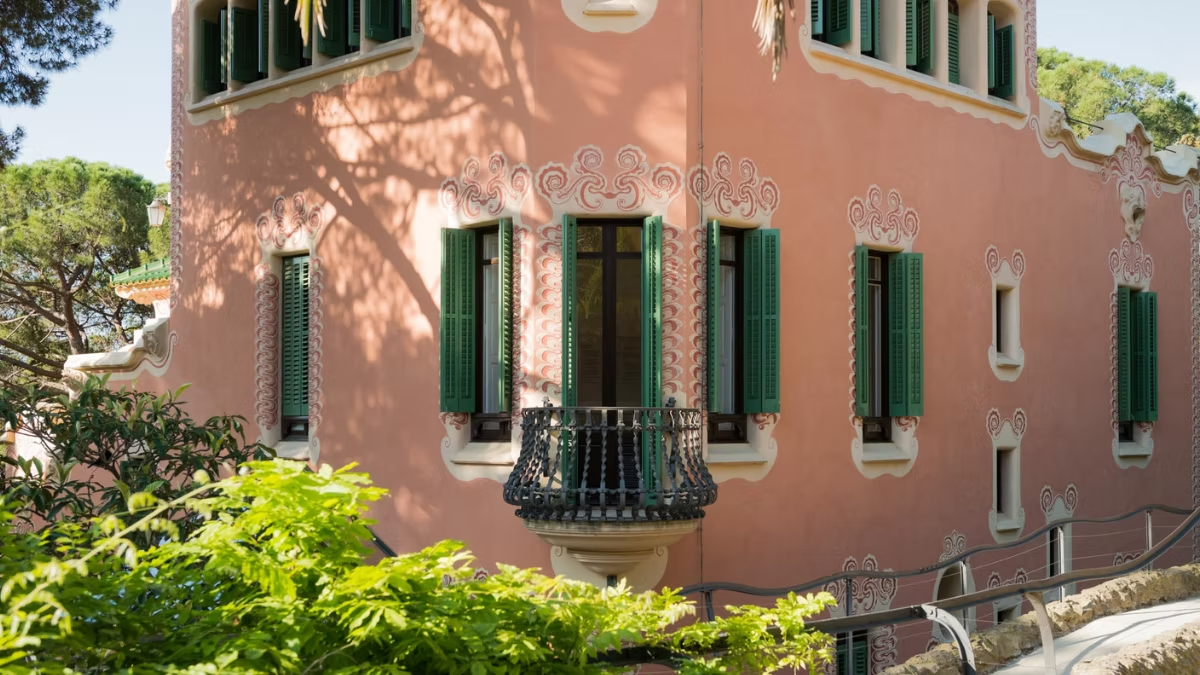
The Gaudí House Museum (Casa Museu Gaudí) is Antoni Gaudí’s former residence inside Park Güell, where he lived from 1906 until 1925. It recently reopened after a restoration period and is now managed by BSM (Barcelona de Serveis Municipals). The museum contains original furniture Gaudí designed for his major projects, his personal bedroom and study, religious objects, architectural models, and a mosaic garden. It requires a separate combined ticket (approximately €28 adult) — not included in the standard €18 Monumental Zone admission.
Most visitors to Park Güell never step inside the Gaudí House Museum. They see the pink house with the spire through the fence, photograph it from the path, and move on. That is a mistake — not because the museum is essential for everyone, but because it offers something that nowhere else in Barcelona can: the private world of the man behind the Dragon Staircase, the Sagrada Família, and Casa Batlló. His bedroom. His prayer books. The furniture he designed for other people’s houses, displayed at the human scale for which they were made.
The House: History and Architecture
Torre Rosa was designed by Gaudí’s collaborator Francesc Berenguer i Mestres in 1903–1904 as a model home for the planned housing estate. Gaudí signed the plans because Berenguer was not a qualified architect. The house attracted no buyers; in 1906 Gaudí purchased it himself and lived there until 1925. It became a museum in 1963 and reopened in 2025–2026 after a full restoration under BSM management.
The building — formally called Torre Rosa for its distinctive pink exterior — was not designed by Gaudí. It was designed by his close friend and collaborator Francesc Berenguer i Mestres in 1903–1904 as a model home for the planned Park Güell residential estate. Gaudí signed the plans on Berenguer’s behalf because Berenguer was not a qualified architect.
The house attracted no buyers. In 1906, at Eusebi Güell’s suggestion, Gaudí purchased it with his own savings and moved in with his elderly father and niece. His father died that same year; his niece died in 1912. Gaudí then lived alone in the house until 1925, when he moved to the workshop of the Sagrada Família to be closer to its construction. He was struck by a tram on Gran Via on 7 June 1926 and died three days later.
In his will, Gaudí donated the house to the Foundation Board of the Sagrada Família. After his death it passed through several owners. In 1960 the Friends of Gaudí association raised funds to purchase it, and in 1963 it opened as a museum. It was declared a national monument in 1969. Since 2024, management has been transferred to BSM — the same municipal body that manages the rest of Park Güell — and the museum reopened in 2025–2026 after a full restoration programme.
What Is Inside
Ground floor dining room: original furniture Gaudí designed for Casa Batlló. First floor bedroom and study: surprisingly austere — simple iron bed, devotional objects, stained-glass windows. Architectural models and sketches for Sagrada Família. Garden: wrought-iron gates from Casa Vicens and Casa Milà, mosaic cross, spiral staircase. An audiovisual presentation covers the key events of his life.
Ground Floor — Living Spaces The dining room contains original furniture that Gaudí designed for Casa Batlló — chairs, mirrors, and a table that reveal his biomorphic design language at domestic scale. The difference between seeing these pieces in a period room and seeing them in a museum display case is significant: in the room, you understand them as furniture that was actually used, and you can see the ergonomic thinking that also drives the Serpentine Bench in the park outside.
First Floor — Bedroom and Study Gaudí’s personal bedroom is unexpectedly austere for a man of his architectural fame. A simple iron bed, a bedside lamp, and stained-glass windows that cast coloured light across the room. Gaudí lived simply and devotedly — his Catholicism was profound and his personal needs minimal. The study contains sketches, documents, and architectural models including early designs for the Sagrada Família.
Religious Objects and Personal Artefacts A significant portion of the collection is devoted to the devotional side of Gaudí’s life — prayer books, crucifixes, and religious objects that contextualise his architecture. It is impossible to understand the Sagrada Família without understanding Gaudí’s faith, and the museum makes this relationship explicit.
Garden The garden around the house contains wrought-iron gates from Casa Vicens and Casa Milà, a mosaic cross, and a spiral staircase leading to a reading alcove. The garden has the intimate scale of a private home and is often quieter than the Monumental Zone above.
Upper Floor Architectural drawings, models, and documents related to Gaudí’s major projects. An audiovisual presentation (~5 minutes) covering the key events of his life plays continuously.
Ticket Prices and Booking
The combined Park Güell + Gaudí House Museum ticket costs approximately €28 for adults (approximately €23 for reduced admission — children 7–12, seniors 65+). The museum has its own timed entry for the house interior separate from the Monumental Zone slot. Both components of the combined ticket operate independently — you can visit the Monumental Zone before or after the museum on the same day.
The museum is located inside the park grounds but outside the Monumental Zone access controls — you can walk to its entrance from the free zone without a Monumental Zone ticket. However, interior access requires a ticket.
Important: Museum slots are limited and sell out earlier than Monumental Zone tickets. Book the combined ticket well in advance — do not assume museum availability when you book your park entry.
Is It Worth Adding?
For dedicated Gaudí fans, architecture students, and visitors with genuine curiosity about the man behind the architecture, yes — the museum adds an irreplaceable dimension that the Monumental Zone cannot provide. For visitors primarily interested in the panoramic views and mosaic highlights, the standard admission is sufficient.
The museum is small (plan 30–45 minutes maximum), quiet, and intimate. It succeeds precisely because it is not trying to be a grand architectural museum — it is a preserved domestic space that happens to have been occupied by one of history’s most original creative minds. The furniture, the austere bedroom, the devotional objects: these are the things that make the architecture in the park outside comprehensible as the product of a human life.
The reviewers who are disappointed by the museum tend to be those who expected architectural spectacle — the museum delivers something different and quieter. Those who go in understanding that they are visiting a house, not a monument, consistently find it worthwhile.
Practical Notes
- Location: Inside the park grounds, near the Turó de les Tres Creus path. Visible from the free zone paths — a distinctive pink house with a spire.
- Visit timing: Visit the Monumental Zone first, then walk to the museum for your timed slot. Allow 10–15 minutes’ walk between the two — see the Park Güell Map for exact locations.
- Photography: Permitted without flash inside the museum. No tripods.
- Accessibility: Ground floor accessible. Upper floors via staircase. Contact parkguell@bsmsa.cat for specific accessibility information.
Frequently Asked Questions
Is the Gaudí House Museum included in the standard Park Güell ticket?
No. It requires a separate combined ticket (approximately €28).
Did Gaudí design the house himself?
No. It was designed by his close collaborator Francesc Berenguer i Mestres. Gaudí signed the plans on Berenguer’s behalf because Berenguer was not a qualified architect.
When was the museum closed for restoration?
The museum underwent a restoration programme and reopened in 2025–2026 under new BSM management. Check parkguell.barcelona for the current status.
How long should I spend in the museum?
30–45 minutes is sufficient for most visitors. An hour if you are a Gaudí enthusiast who wants to study every piece.
Can I visit the museum without a Monumental Zone ticket?
You can walk to the museum entrance through the free zone without a Monumental Zone ticket. But entering the museum interior requires the combined ticket.
